

Leadership
ISAPD Board
Anjelica S. Gallegos
Co-Founder, President, Director
Anjelica S. Gallegos (Jicarilla Apache Nation | Pueblo of Santa Ana) pushes boundaries of design thought and practice in sensitive environments, including the Southwest, Arctic, and New England coast. Gallegos serves as an architectural designer at Stantec.
Anjelica is a co-founder and Director of the Indigenous Society of Architecture, Planning, and Design, with work featured in Architectural Digest, Metropolis Magazine, and more. She is a Fulcrum Fund recipient, the Regional Regranting Program of The Andy Warhol Foundation for the Visual Arts, and has presented her research at the Society of Architectural Historians International Conference.
Gallegos designs systematic programming that elevates Indigenous history, practices, and knowledge while advancing connection-building and reciprocity in the broader architecture field. Her research and built work focuses on Indigeneity in architecture including site memory, policy and architecture intersections, like the Federal Indian boarding school system, and sustainable design principle application.
Gallegos served as an ambassador of President Obama’s Generation Indigenous Initiative, advocating for Indian and environmental priorities, including at the White House Tribal Nations Summit and United State of Women Summit. Prior, Anjelica served in public relations for the Jicarilla Apache Nation and the Cumbres and Toltec Scenic Railroad.
She graduated with a Bachelor of Science (Cum Laude) in Architecture and a minor in Photography from the University of Colorado Denver. Gallegos graduated with her Master of Architecture degree from Yale School of Architecture as the Alpha Rho Chi Medal recipient.
https://anjelicasgallegos.cargo.site/

Anjelica S. Gallegos.
Miriam Diddy
Vice President, Region Director (Deserts & Xeric Shrublands)
Miriam Diddy’s work builds upon both the tangible and intangible elements of Indigenous planning and design. Her work focuses on bridging the ties between the contemporary built environment and cultural narratives that honor, recognize, and preserve the resiliency of Indigenous culture, history, and practices in everyday places. Miriam is a member of the Navajo Nation (Diné) from the Táchíí’nii clan and Hopi Pueblo with additional Ukrainian heritage.
For the past 12 years, she has worked as a design professional on planning, mapping, architecture, landscape architecture, interior design, and community engagement efforts for Southwest communities, including 15 Tribes. Currently, Miriam is a Senior Planner at Pland Collaborative, a landscape architecture and planning firm based in Albuquerque, NM.
Miriam joined ISAPD as a member in 2022 and became Region Director of Deserts & Xeric Shrublands of ISAPD in 2024. She currently volunteers for several other non-profits including as Secretary for the American Indian Council of Architects and Engineers (AICAE), recent Steering Committee Member for the Tribal + Indigenous Planning Division of the American Planning Association (APA), and Board Member of Creative Startups.
This past year, she contributed as an advisor on the new landmark exhibition at the Indian Pueblo Cultural Center – “Restorying Our HeartPlaces: Contemporary Pueblo Architecture,” where several of her professional projects are featured. In 2024, she received support from the Fulcrum Fund, a grant program of 516 ARTS made possible by The Andy Warhol Foundation for the Visual Arts and the Frederick Hammersley Fund for the Arts, to co-design and implement ISPAD’s “First Future Project.”
Most recently, she became Co-Lead of LANDFRAME in a pro-bono partnership under the Page Indigenous Land Acknowledgement Tool (PILAT) initiative to create a digital platform supporting meaningful land acknowledgement statements and mapping tools with land-based resources, culturally grounded design, and data rooted in Indigenous knowledge.
She has received several awards including the 2024 Community Impact Award from the Association of Tribal Archives, Libraries, and Museums for ISAPD’s “First Future Project” and the 2018 New Mexico Infrastructure Finance Authority Innovation Award for her work on the Zuni Housing Needs Assessment project.
Miriam received a Bachelor of Arts in Environmental Planning and Design from the University of New Mexico (Summa Cum Laude).
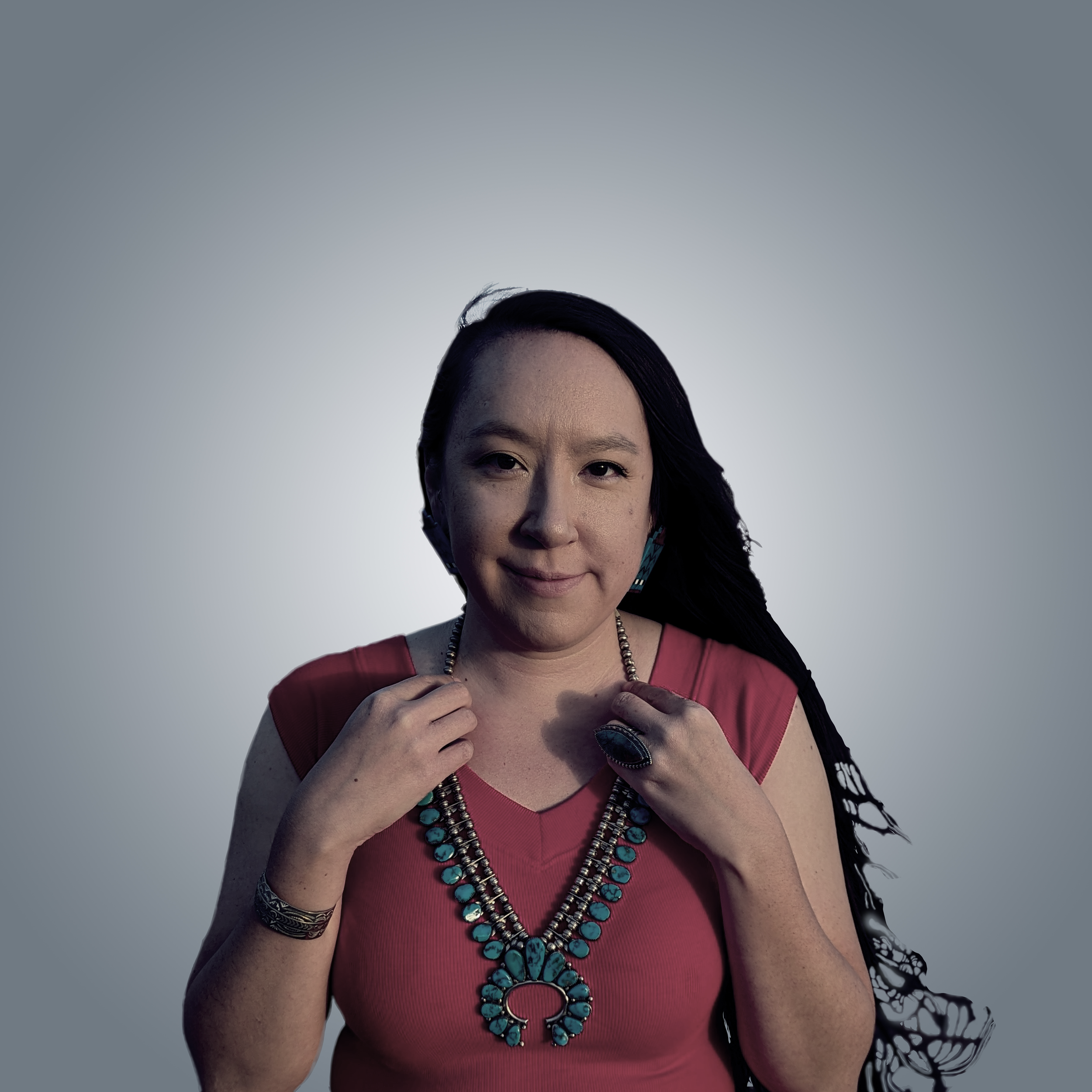
Miriam Diddy
Christian Nakarado
Acting Treasurer
Christian Nakarado grew up in the mountains outside of Golden, Colorado. He received his B.A. in Architecture from Yale College and his M. Arch from the Yale School of Architecture. He has spent the last two decades working in practices on the east and west coasts of the United States, as well as in Canada and England. He is principal of Slow Built Studio, a research and design practice based in New Haven, Connecticut with projects across multiple states and scales. These include pro bono architectural services provided to the Saginaw Chippewa Tribal Nation, focusing on historic buildings on the site of the former Mt Pleasant Indian Industrial Boarding School in Isabella County, Michigan. He is a licensed architect in New York, Connecticut, and Michigan. He is also a member of the American Institute of Architects (AIA) and the American Indian Council of Architects and Engineers (AICAE), and is an enrolled member of the Sault Ste. Marie Tribe of Chippewa Indians.
Currently an Assistant Professor of Art at Wesleyan University in Connecticut, Christian previously held positions at the Birmingham School of Architecture and Design, at Daoust Lestage in Montréal, at Sage and Coombe Architects in New York, and at Michael Maltzan Architecture in Los Angeles. His teaching and research both focus on impermanence in design and indigenous precedents for non-extractive making. Christian's research proposes ways to transition from heavy, resource-intensive models of building and development to simpler, lighter methods of low-carbon fabrication, including objects that are designed to degrade.

Christian Nakarado
Brent Kokonya
Secretary
Kokonya is an artist and registered architect in Kenya hailing from Nairobi, Kenya based in New York, United States.
He also has over 3 years of experience having worked on projects based in Kenya, South Sudan, Rwanda and the United States spanning master planning, commercial, cultural and residential design. He has more specialized experience predominantly in healthcare having worked on facilities offering imaging, phlebotomy, surgical, orthopedic and hematology/oncology services for healthcare systems such as New York’s Mount Sinai and Hospital for Special Surgery, Penn Medicine in New Jersey and Pennsylvania and Hartford Healthcare in Connecticut. He currently works at Perkins&Will as a Designer II.
Expressing his architectural research and design through culturally grounded illustrations, his work has been showcased in exhibitions and magazines in the United Kingdom and Portugal, shortlisted for and winning awards like the Drawing of the Year, the Lexus Design Award and the Diana Award. He was recently invited to participate in the third edition of the Sharjah Architecture Triennial in the United Arab Emirates.
He is interested in infrastructure, healthcare and placemaking, developing practice that brings history, heritage and contextual narratives to the fore of design discourse in an equitable and empathetic way.
Kokonya holds a post-professional master’s degree in architecture from Yale University. As an Ulli Scharnberg scholar, he graduated from Yale in 2024 with the David M. Schwarz Traveling Fellowship Award for his study of paratransit landscapes in Kenya and Paraguay. He pursued his bachelor’s in architecture at Jomo Kenyatta University in Kenya, with a brief stint at TU Delft.

Brent Kokonya
Charelle Brown
Co-Founder
Charelle Brown is from Kewa Pueblo, in what is currently “New Mexico” and comes from the Frog clan. She is a recent graduate of Yale University with a bachelor’s degree in architecture. While at Yale, she co-founded the Indigenous Scholars of Architecture, Design, and Planning (ISAPD) in September 2018. Charelle actively reclaims her body, movement, and wellness through the sport of Olympic weightlifting and trains with the Albuquerque Strength Academy. She maintains sponsorships with Earth Fed Muscle as an Earth Fed Elite Content Creator and Thick Solid Heavy, a lifting-specific clothing brand. Charelle is a Junior Architectural Designer at Suina Design + Architecture, a 100% Native Woman-owned company located in Tiwa Territory in-so called “Albuquerque.” She is also the Community Defence Organizer for Pueblo Action Alliance. Her current and past design and planning work centers Indigenous knowledge, navigation, and futurisms.

Charelle Brown
Emily Velez Nelms
Emily Velez Nelms (she/her) is a visual artist and educator born and raised in southern Florida. Her work analyzes the nature of looking and being seen, engaging with questions of desire, surveillance, and power as they structure relations between body, land, and infrastructure. Drawing on archival formation, marine ecologies, and theories of racial formation, her practice foregrounds the entanglement of visibility and spatial production in tropical and touristic geographies.
Her MED thesis at the Yale School of Architecture, Domestic Exotic, examined how cultural tourism has shaped the infrastructural development of southern Florida alongside the competing forces of Native sovereignty, American entertainment, and institutional collecting practices.
She has participated in residencies at the International Sculpture Center, the Skowhegan School of Painting and Sculpture, the Yale Center for Collaborative Arts & Media, MASS MoCA, Fountainhead Arts, and the Whitney Museum of American Art’s Independent Study Program. Her first museum solo exhibition, The Resonance of Things Unseen, was presented at the Yale Peabody Museum (April–November 2024).
Velez Nelms holds a BFA in Painting from the Savannah College of Art and Design (2013), an MFA in Sculpture from the University of California, Los Angeles (2019), and an MED from the Yale School of Architecture (2024), with additional studies in architecture at the University of Miami. She currently serves on the board of the Indigenous Society of Architecture, Planning, and Design (ISAPD). From 2022–2024 she was the graduate coordinator for the Yale Group for the Study of Native America and has taught in the Interdisciplinary Studies Department at the University of Hartford.

Emily Velez Nelms
Tamatamaarangi Whiting
Tamatamaarangi Whiting is a Māori landscape architect and designer whose name, "son of the sky", connects him to Ranginui, the sky father, and reflects the relational cosmologies that ground his origins. Descending from Te Whānau ā Apanui, he shares connections through the Austronesian diaspora that link Aotearoa to the archipelagos of Eastern Indonesia. These intertwined Indigenous worldviews guide his approach to design and his relationships to place.
He currently works between two practices: consulting with New York-based SCAPE Landscape Architecture on large-scale urban projects and leading Makacolab, his own collaborative micro-practice for Indigenous design projects across the Pacific. Based in Sydney on Gadigal Land, he leads projects, fosters Pacific Rim connections for SCAPE, and cultivates resilient landscapes that weave cultural narratives, community co-design, and sustainable approaches to urban transformation.
He is deeply interested in the intersection of climate resilience and Indigenous sovereignty, specifically how traditional ecological knowledge can inform modern infrastructure. His passion lies in developing a practice that centers Indigenous voices in the design process, ensuring that urban landscapes remain connected to the ancestral stories and ecological systems of place.

Tamatamaarangi Whiting